
Hand Tufted Tools: A Comprehensive Guide for Carpet Makers

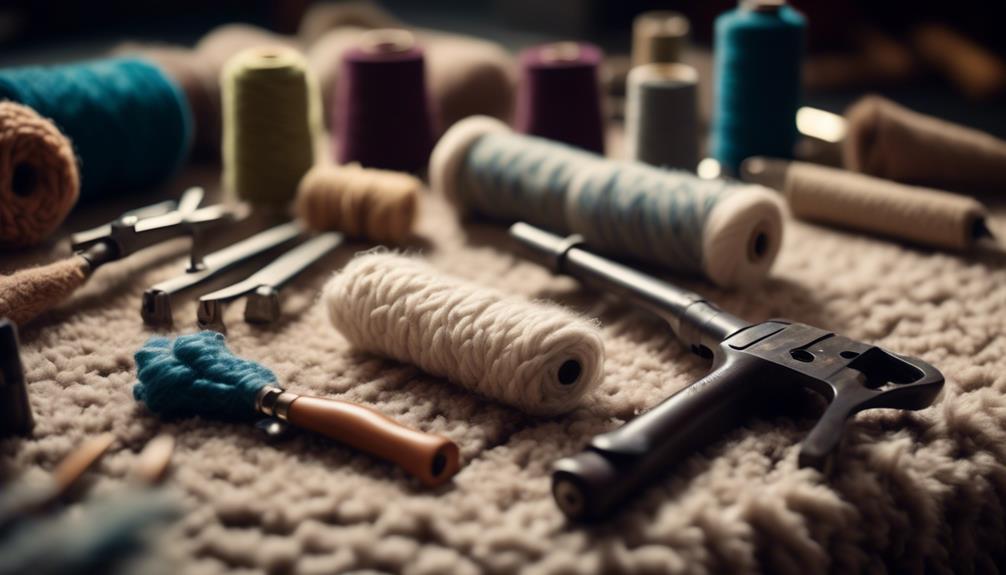 in depth guide to hand tufted carpet making
When you walk into a luxurious hotel lobby and admire the intricate designs of the plush carpets underfoot, you're likely observing the handiwork of skilled artisans using hand-tufted tools. These tools are your key to unlocking the potential of custom carpet making, allowing you to create durable and distinctive pieces for a variety of settings.
As you explore the world of hand-tufted rugs, you'll need to familiarize yourself with the essential equipment, from tufting guns to the variety of yarns that can add texture and color to your creations. You'll also discover the importance of selecting the right backing material and mastering the techniques that can turn a simple design into an exquisite work of art.
In the following sections, you'll find a wealth of knowledge that will not only refine your craft but also enhance the quality and character of each piece you create. Let's begin by examining the cornerstone of your toolkit: the tufting gun, and why its precision and adaptability make it indispensable for today's carpet makers.
Key Takeaways
- The selection of tufting equipment, including a tufting gun and sturdy backing material, is essential for precise and durable carpet making.
- Choosing the right yarn is crucial, considering factors such as material, pile height compatibility, color choices, and balancing quality with cost-efficiency and customization potential.
- Backing material options, such as cotton, jute, and polyester, should be chosen based on both aesthetic appeal and functionality, as they influence the rug's durability, feel, and performance.
- Proper tufting gun techniques, including outlining the design, maintaining consistent tension, and adjusting the gun for desired pile height, are necessary for achieving even and high-quality loops. Regular cleaning and maintenance of the tufting gun are also important for optimal performance.
Essential Tufting Equipment
To create your hand-tufted rug, you'll need a tufting gun, which is the cornerstone of all essential tufting equipment. This key tool allows you precise control as you push yarn through the backing material, giving life to your unique designs. Unlike rugs made by robotic arms, your manual input ensures that each piece is genuinely handcrafted.
You'll also require a sturdy backing material that serves as the canvas for your creation. This foundation holds the yarn in place and is critical for the durability of your rug. Once you've finished tufting, you'll apply latex glue to the back of the rug to secure the yarns. This step is vital; without it, your rug could fall apart.
Hand-tufted rugs aren't only affordable but also built to last, making them a popular choice among consumers. The beauty of this process lies in its customization potential—flaws are scarce when you've specified the design. Moreover, the efficiency of hand-tufting is evident, as a single worker can complete a rug in just a few days.
With these tools at hand, you're set to create a masterpiece that's both beautiful and practical.
Selecting the Right Yarn
Having established the essentials of tufting tools, let's focus on how choosing the right yarn can elevate your hand-tufted rug's quality and style. The material of the yarn, from wool to synthetic fibers, significantly impacts your rug's texture and longevity. You need to weigh the pros and cons of each, considering not only durability but also the rug's intended use and the maintenance it will require.
As you select your yarn, think about the pile height you aim for with your tufting guns. The right yarn will work harmoniously with your equipment to create the plushness or flatness you desire. The color choices for your yarn are crucial too—they must complement the rug's design and enhance the overall aesthetic. This is where understanding your yarn's dye compatibility becomes important.
You're balancing quality with cost-efficiency, so compare prices, but don't compromise on the yarn that best fits your project's needs. Remember, customization can set your rug apart. Explore variations in yarn thickness, texture, and color to craft a unique statement piece. Your choice in yarn is as pivotal as your tufting guns; it's the thread that weaves together style, function, and artistry in your hand-tufted rugs.
Backing Material Choices
When you select a backing material for your hand-tufted rug, you're choosing the foundation that will influence its durability, feel, and performance. The backing fabric is essentially the canvas that holds your design together, so it's crucial to pick the right one. Different materials offer varying benefits, and it's important to match these to the needs of your space.
Cotton is a popular choice for a backing material. It's soft and flexible, providing a pleasant feel underfoot. However, if you're after a rug that has more structure, jute is your go-to. It offers sturdiness that's ideal for rugs that need to hold their shape over time. For areas that see a lot of foot traffic, a polyester secondary backing might be best. Polyester is resistant to moisture and abrasion, ensuring your creation can withstand the rigors of daily use.
As you navigate through these different materials, consider not just the aesthetic of your rug but also the functionality. The right backing can extend the life of your hand-tufted rug and ensure it remains a cherished part of your home for years to come.
Tufting Gun Techniques
Mastering the tufting gun is essential for creating high-quality hand-tufted rugs with precision and efficiency. As a handheld tool, the tufting gun swiftly inserts loops of yarn into a backing material, forming the pile of your rug. To bring your designs to life, you'll need to develop a steady hand and an understanding of various tufting gun techniques.
- Outline your design: Before you begin, clearly mark your pattern on the backing material to serve as a guide.
- Consistent tension: Keep the tension on your yarn consistent to prevent irregularities in the pile.
- Even pace: Move the tufting gun at a steady pace to ensure even loops and prevent pile distortion.
- Pile height control: Adjust the tufting gun to achieve the desired pile height for your design.
- Regular maintenance: Clean and oil your tufting gun regularly to keep it in top working condition.
Working with a tufting gun requires patience and practice. You'll find that with time, creating intricate patterns and durable rugs becomes second nature. Remember, the beauty of a hand-tufted rug lies in the skillful application of these techniques, turning a spool of yarn into a work of art under your deft touch.
Finishing and Care Tips
To ensure your hand-tufted rugs stand the test of time, it's crucial to apply proper finishing touches and adhere to meticulous care guidelines.
Begin by using synthetic rubber glue to secure the yarns. Make sure you cover all yarn ends thoroughly, as this will prevent them from unraveling and will contribute to the longevity of your rug.
When it comes to care, you'll want to avoid rough treatment. Beating or shaking your rugs can lead to fiber deterioration, which shortens their lifespan. Instead, regularly vacuum your rug to remove dirt and debris.
If you're dealing with a spill, blot it gently; water can loosen the glue that holds the fibers in place.
Frequently Asked Questions
Is Tufting an Expensive Hobby?
Yes, tufting can be an expensive hobby. You'll find costs for materials like yarn and backing fabric add up, not to mention a quality tufting gun, which is a hefty investment itself.
What Is the Difference Between Hand-Tufted and Machine Tufted Carpet?
You're comparing apples and oranges: hand-tufted carpets boast a personal touch with thicker tufts, while machine-tufted ones are uniform but less distinct. Hand-tufting allows customization; machine-tufting offers consistency and speed.
Are Hand-Tufted Rugs Good Quality?
Yes, you'll find hand-tufted rugs are good quality. They're durable, maintain their appearance for at least a decade, and offer intricate designs, striking a balance between affordability and craftsmanship.
What Is the Difference Between Hand Knotted and Hand-Tufted?
Hand-knotted rugs are entirely made by hand, while hand-tufted ones use a tufting gun. You'll find that knotted rugs are more durable but take longer to make than the quicker tufted variants.
Conclusion
You've now got the tools to weave your magic, transforming yarn and backing into plush tapestries underfoot. Remember, your tufting gun is your wand, flicking patterns and colors into existence.
Choose your materials wisely, practice your techniques, and always give your rugs the TLC they deserve.
With this guide, you're not just making carpets; you're crafting cozy comfort for hearths and homes.
Go ahead, let your creativity unfurl like a freshly tufted rug!