

A gas leaf blower is a gardening tool that uses a gas-powered engine to generate a strong stream of air to blow leaves, grass clippings, and other yard debris.
Gas leaf blowers are more powerful than electric models and do not have a cord, allowing for unlimited mobility and extended run time.
They come in handheld and backpack styles. Backpack blowers distribute the weight across your shoulders and back while a handheld unit is carried only in your hands.
Gas-powered leaf blowers are essential tools for keeping your yard looking pristine all year long. With their powerful gas engines, these blowers can generate airflow over 150 mph to blow away leaves, grass clippings, pine needles, and other yard debris with ease.
Unlike electric models which need to stay near an outlet, gas leaf blowers allow you to roam freely around your property thanks to their onboard fuel tank. They have significantly more power and longer runtimes than their electric counterparts, making them ideal for larger properties.
An Introduction to Gas-Powered Leaf Blowers
A gas leaf blower is a gardening tool that uses a small gas-powered engine to generate a strong stream of air to blow yard debris like leaves or grass clippings. The powerful airflow is produced by the engine spinning an impeller inside the blower housing at very high speeds.
This fast-moving stream of air exits the blower nozzle at speeds typically between 150 to 200 mph. The force generated by the airflow is measured in cubic feet per minute (CFM) with most gas leaf blowers producing airflows of 500 CFM or higher.
This high-velocity wind easily moves heavy, wet leaves and debris that would normally require raking. It allows you to quickly clean up yard waste from even the largest properties.
Gas leaf blowers come in handheld and backpack configurations:
Handheld: As the name suggests, these are held in your hands during operation. They are compact and lightweight but pack less power than backpack models. Handheld blowers work well for smaller residential yards.
Backpack: The blower unit is worn on your back supported by padded shoulder straps and a hip belt. This distributes the weight across your body for greater comfort during extended use. Backpack blowers are more powerful and allow you to clear debris from large areas efficiently.
Within these two types, there are also 2-stroke and 4-stroke engine options which we’ll discuss shortly when covering fuel options.
Why You Need a Gas Leaf Blower (Use Cases)
Gas leaf blowers are essential tools for quickly clearing leaves, debris, and grass clippings from large areas. Their powerful gas engines allow unlimited mobility and extended runtimes compared to electric models, making them ideal for efficiently cleaning large properties.
Gas blowers offer versatility as well, with the ability to clear snow, clean gutters, spread mulch, and perform other yardwork tasks. For homeowners with expansive yards or landscaping professionals, a gas leaf blower is a must-have for saving time and effort.
While manual raking can certainly get the job done, a gas leaf blower makes quick work of yard cleanup. Here are some of the top reasons to use a gas-powered leaf blower:
Quickly Clear Leaves, Grass, and Debris from Large Areas
The powerful airflow can clear leaves, grass clippings, sticks, pine cones, and other yard waste from areas like:
- Lawns
- Gardens
- Driveways
- Sidewalks
- Patios
- Decks
- Wooded areas
With a gas blower, you can rapidly clean up debris from even the largest properties.
Remove Snow from Driveways, Walkways, and Decks
A gas blower is a versatile tool that can also help clear light snow accumulations from paved surfaces. The high-velocity air stream can blow snow off driveways, walkways, porches, and decks. This is much faster than shoveling.
Clean Gutters of Leaves and Debris
Use the blower nozzle to clear out clogged gutters from the ground. This is safer than climbing a ladder to scoop debris by hand.
Blow Away Grass Clippings After Mowing
After mowing the lawn, you can quickly blow all the grass cuttings off sidewalks, driveways, patios, and garden beds. This helps prevent messy clumping.
Clear Away Fallen Branches and Yard Waste
After storms or high winds, you’ll inevitably have small branches and sticks littering the yard. A gas blower makes fast work of blowing this debris into piles for disposal.
Prepare Driveways and Patios for Power Washing
Use the blower to remove dirt, leaves, and debris from outdoor hardscapes in preparation for cleaning with a power washer. This prevents pushing grime into cracks and crevices.
Clear Away Standing Water
The powerful airflow from a gas leaf blower can effectively blow away puddles and standing water from patios, walkways, and driveways after rainstorms.
Clean Outdoor Furniture, Grills, etc. Before Storage
At the end of the season, use your leaf blower to remove dirt, debris, spiderwebs, and other gunk that accumulates on outdoor furniture, grills, and equipment before storing them away for winter.
Help Spread Mulch, Rock, Fertilizer, and More Evenly
The airflow from a gas blower comes in handy when doing landscaping work like spreading mulch, gravel, or fertilizer evenly across your yard. As you can see, a gas-powered leaf blower is useful for far more than just removing leaves. It’s an essential multi-purpose tool for any homeowner.
Types of Gas Leaf Blowers
There are three main types of gas leaf blowers: handheld, backpack, and wheeled models. Handheld blowers are lightweight and maneuverable, best for small residential yards.
Backpack blowers distribute the weight across your body for comfort and are more powerful for large properties. Wheeled gas blowers are the most robust commercial-grade option, designed for prolonged use on expansive spaces like parks and golf courses.
Gas leaf blowers come in a range of styles and configurations to suit different yard sizes and needs.
The main types include:
Handheld Gas Leaf Blowers
Handheld gas blowers are lightweight and compact making them ideal for smaller residential yards. Models like the Husqvarna 125B weigh as little as 9.7 lbs allowing you to maneuver them easily.
The engine and impeller unit are contained in a small housing that you hold with both hands during operation. The nozzle is controlled via a trigger under your right hand.Handheld blowers work well for tasks like clearing off patios, walkways, small gardens, and mulch beds.
They typically produce air speeds around 150 mph and airflows between 400-500 CFM.While convenient, handheld blowers do have some downsides:
- Less powerful than backpack models
- Can strain your arms, hands, and shoulders during extended use
- Runtime limited to about 1-2 hours on a tank of gas
Still, for small residential yards, handheld gas blowers offer an affordable and portable solution.
Backpack Gas Leaf Blowers
Backpack gas leaf blowerFor larger properties, backpack gas leaf blowers are the most efficient and comfortable option. With these blowers, the engine and impeller unit is worn on your back supported by padded shoulder straps and a hip belt.
This backpack design distributes the weight across your body for greater comfort and less fatigue during prolonged use. It also allows the engine to be larger and more powerful.
Backpack blowers generate air speeds over 200 mph and airflows between 500-700+ CFM. This extra power lets you rapidly clear debris from larger areas.Some of the benefits of backpack leaf blowers include:
- More power than handheld models
- Increased comfort from weight distribution
- Runtimes up to 4 hours on a tank of gas
- Can be used with optional vacuum/mulching attachments
The trade-off is backpack blowers have a higher cost. But for larger yards and extended clearing tasks, a backpack model is worth the investment.
Wheeled/Walk-Behind Gas Leaf Blowers
Walk behind gas leaf blowerAt the top end of the power spectrum, walk-behind gas leaf blowers are ideal for commercial use.
These units have a large engine that drives an impeller inside a housing mounted on two or four wheels.The engine is started via a pull cord or electric starter. Walk-behind blowers typically have speeds up to 250 mph and airflows over 700 CFM. Large 8-10 inch rear wheels allow you to roll the blower forward as you work.
These heavy-duty blowers are designed for prolonged commercial use on properties like golf courses, parks, schools, and municipal spaces. They provide unmatched debris clearing capabilities but are overkill for typical residential settings.
Features to Look for in a Gas Leaf Blower
When choosing a gas leaf blower, key features to consider are power measured in CFM and MPH, weight, fuel type (2-stroke or 4-stroke engine), noise level in decibels, brand reputation, and warranty coverage.
Also look for an adjustable nozzle, ergonomic controls, and padded harness on backpack models for comfort.
To choose the best gas-powered leaf blower for your needs, keep these key features and specifications in mind:
Power
The power of a gas leaf blower is measured in terms of the:
- Air speed – The velocity of the air stream exiting the nozzle, measured in miles per hour (mph). Look for gas blowers with air speeds between 150-250 mph.
- Airflow – The volume of air moved, denoted in cubic feet per minute (CFM). Most gas blowers generate 400-700+ CFM.
Higher numbers in both categories mean more power to move debris. When comparing blowers, pay attention to these ratings.
Weight
Gas blowers have engines and steel impellers that make them heavier than electric models. Weights range from:
- Handheld: 8-15 lbs
- Backpack: 20-25 lbs
- Wheeled: 50+ lbs
If choosing a handheld model, pick one on the lighter side for easier maneuverability. For backpacks, make sure the shoulder straps and hip belt are padded for comfort.
Fuel Type
Gas blowers are powered via small gasoline engines. You have two fuel options:
2-stroke
2-stroke engines require mixing gasoline and 2-stroke oil into the fuel tank. This oil lubricates the engine internals. 2-stroke engines have fewer moving parts and are lighter but require more maintenance.
4-stroke
Also called 4-cycle, these engines run on straight gasoline with no oil mixing required. The engine has its own separate oil reservoir for lubrication. 4-stroke engines are more fuel efficient and produce less emissions but are heavier.
For occasional homeowners, a 2-stroke engine offers simplicity and cost savings on oil. Commercial users may prefer the lower emissions and maintenance of 4-stroke engines.
Noise Level
Gas leaf blowers generate significant noise ranging from:
- Handheld: 95-105 dB
- Backpack: 100-115 dB
Always wear ANSI-rated hearing protection when operating a gas blower. Look for models with noise-dampening features to reduce high-pitched tones.
Nozzle and Controls
Look for an adjustable nozzle to go from a narrow stream to wide fan pattern. Seek simple, ergonomic controls for operating the throttle and switches. On backpack models, padded harness straps improve comfort.
Brand Reputation and Warranty
Reputable brands like Husqvarna, Echo, and Stihl are known for making quality gas-powered equipment. Look for at least a 2-year consumer warranty and longer commercial warranties.
Best Gas Leaf Blowers
Husqvarna 952711925 125B Gas Leaf Blower
28-cc 1.1-HP 2-Cycle Handheld Leaf Blower, 470-CFM, 170-MPH, 12.5-N Powerful Clearing Performance and Ergonomic Design
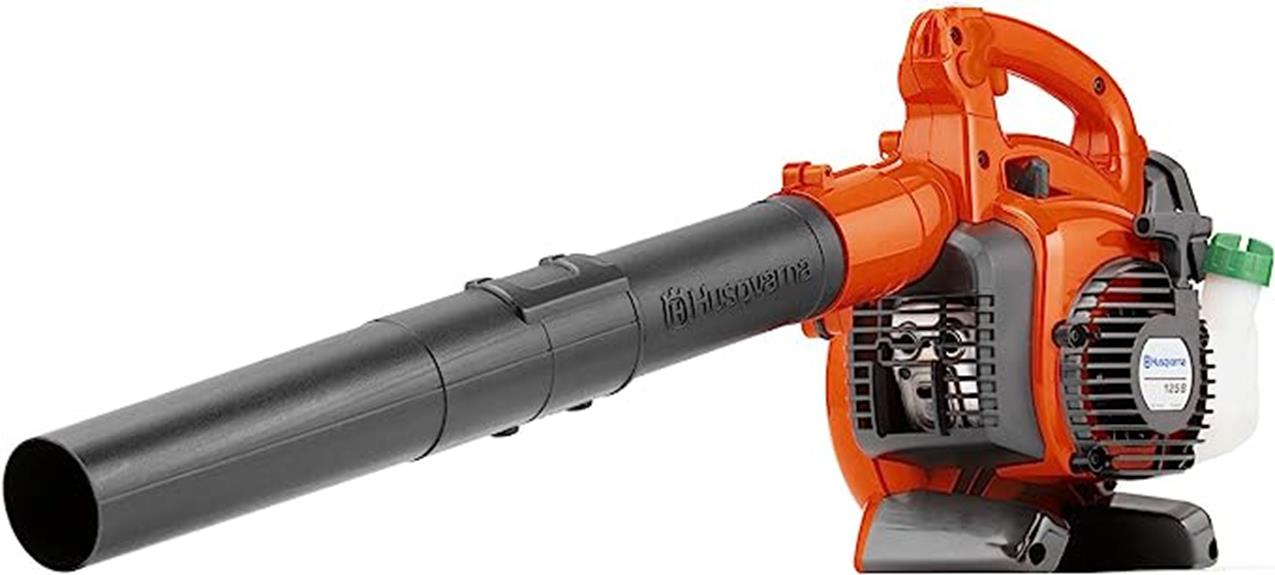
When considering the best gas leaf blowers, you should definitely take a closer look at the Husqvarna 952711925 125B Gas Leaf Blower for its powerful clearing performance and ergonomic design.
With a 28-cc 1.1-HP 2-cycle engine, it offers a remarkable 470 CFM air volume and 170 MPH air velocity for efficient leaf clearing. The adjustable blowing tube length and cruise control function further enhance its performance.
Its lightweight, 9.4-pound design, and minimized rotational force on the wrist reduce user fatigue during extended use. Additionally, the auto return stop switch and easy-to-access control panel make operation smooth and hassle-free.
As a bonus, it comes with a 2-year manufacturer’s warranty, providing peace of mind.
Product Specs:
- Engine: 28-cc 1.1-HP 2-cycle
- Air Volume: 470 CFM
- Air Velocity: 170 MPH
- Weight: 9.4 pounds
- Fuel Tank Capacity: 16.91 ounces
Pros:
- Powerful clearing performance
- Ergonomic design reduces user fatigue
- Adjustable blowing tube and cruise control function
- Auto return stop switch and easy-to-access control panel
- 2-year manufacturer’s warranty
Cons:
- Requires mixing fuel and oil
- May be relatively loud
- Initial cost investment
Echo PB-2520 – 170 MPH – 453 CFM – 25.4 cc Gas Engine Leaf Blower
Heavy Duty, Durable, Handheld, and Light Weight Leaf Blower
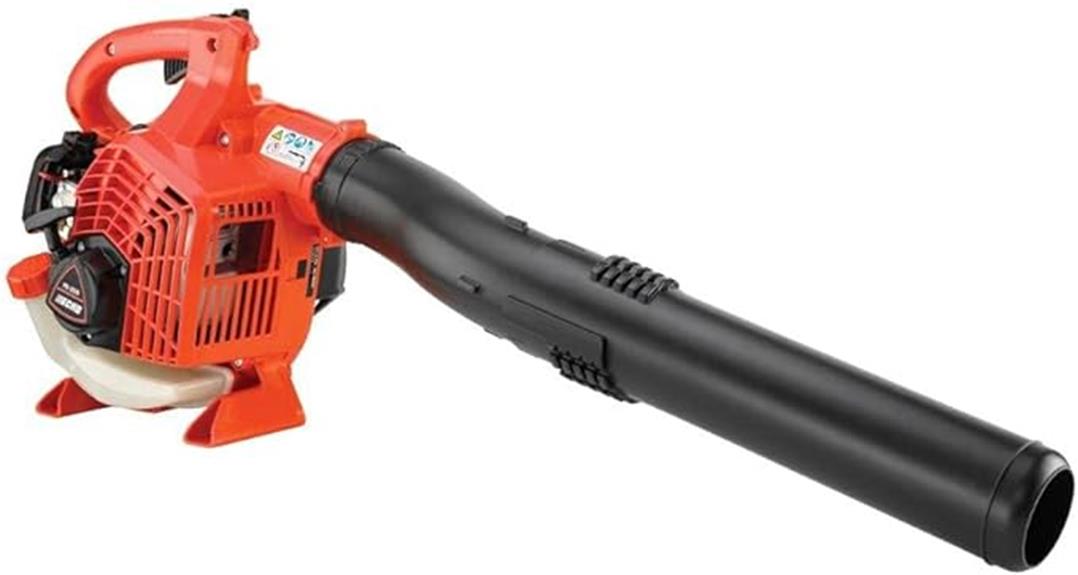
You should consider the Echo PB-2520 170 MPH 453 CFM 25.4 cc Gas Engine Leaf Blower when searching for the best gas leaf blowers.
This Echo blower offers a powerful blowing performance with its 25.4 cc gas engine, delivering a high airspeed of 170 MPH and an impressive air volume of 453 CFM.
It’s designed to be heavy-duty and durable while remaining lightweight for comfortable handheld use. Users have praised its reliability and power, making it a great tool for clearing leaves, grass clippings, and other debris.
However, some users have raised concerns about its design, particularly the extension piece.
Overall, the Echo PB-2520 is a solid choice for those seeking a dependable and efficient gas leaf blower.
Product Specs:
- Gas engine: 25.4 cc
- Airspeed: 170 MPH
- Air volume: 453 CFM
- Design: Heavy-duty, handheld, lightweight
Pros:
- Powerful and reliable performance
- Durable construction
- Lightweight and easy to handle
Cons:
- Design issues with the extension piece
- Some users may find it slightly bulky
- Lack of clear instructions for use
Husqvarna 970466901 150BT 51cc 2.16 HP 2 Cycle Gas Backpack Leaf Blower
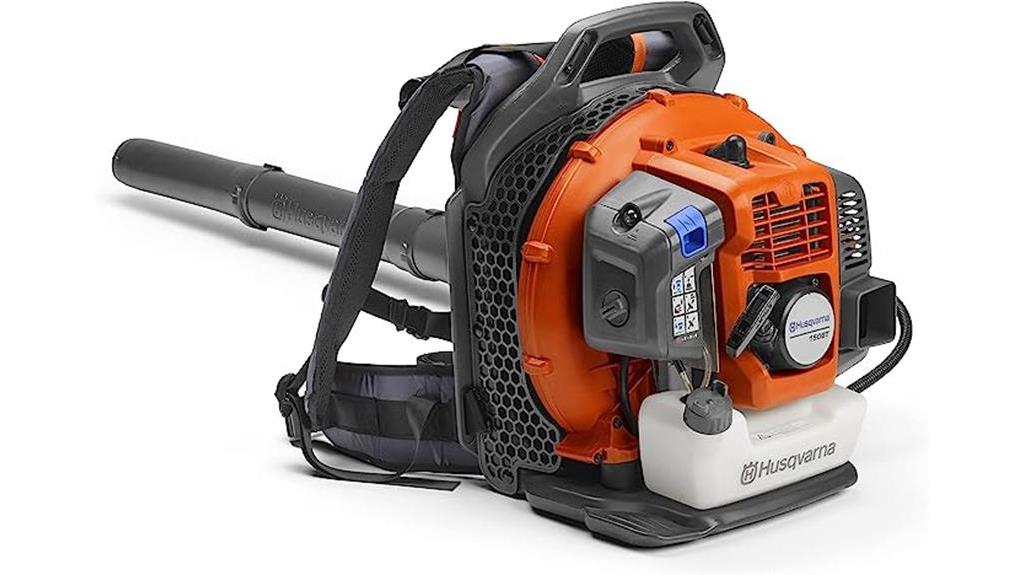
The Husqvarna 970466901 150BT 51cc 2.16 HP 2 Cycle Gas Backpack Leaf Blower stands out as a top choice for powerful and efficient yard maintenance.
With its high-powered 2-cycle engine, ergonomic design, and reduced emissions, it offers the ideal combination of performance and environmental consciousness.
The ergonomic harness system ensures optimal comfort during extended use, while the air purge system and variable speed throttle make operation easy and convenient.
This gas-powered backpack leaf blower is perfect for regular yard maintenance and demanding lawn care tasks, making it a valuable addition to your outdoor equipment arsenal.
Product Specs:
- Brand: Husqvarna
- Color: Orange
- Power Source: Gas Powered
- Form Factor: Backpack
- Air Flow Capacity: 765 Cubic Feet Per Minute
- Noise Level: 45 dB
- Item Weight: 22 Pounds
- Maximum Speed: 270 Miles per Hour
- Model Name: 150BT
- Product Dimensions: 18L x 11W x 14H
- Speed: 7000 RPM
- Manufacturer: Husqvarna
- ASIN: B09TT5ZMPR
- Country of Origin: China
- Customer Reviews: 4.3 out of 5 stars, 365 ratings
- Best Sellers Rank: #491 in Patio, Lawn & Garden, #8 in Leaf Blowers
- Is Discontinued By Manufacturer: No
Pros:
- Powerful 2-cycle engine
- Ergonomic design for comfort
- Reduced emissions and increased fuel efficiency
- Easy operation with air purge system and variable speed throttle
- Ideal for regular yard maintenance and demanding lawn care tasks
Cons:
- Relatively heavy at 22 pounds
- May not reach the advertised wind speed for some users
Poulan Pro PR48BT, 48cc 2-Cycle Gas 475 CFM 200 MPH Backpack Leaf Blower
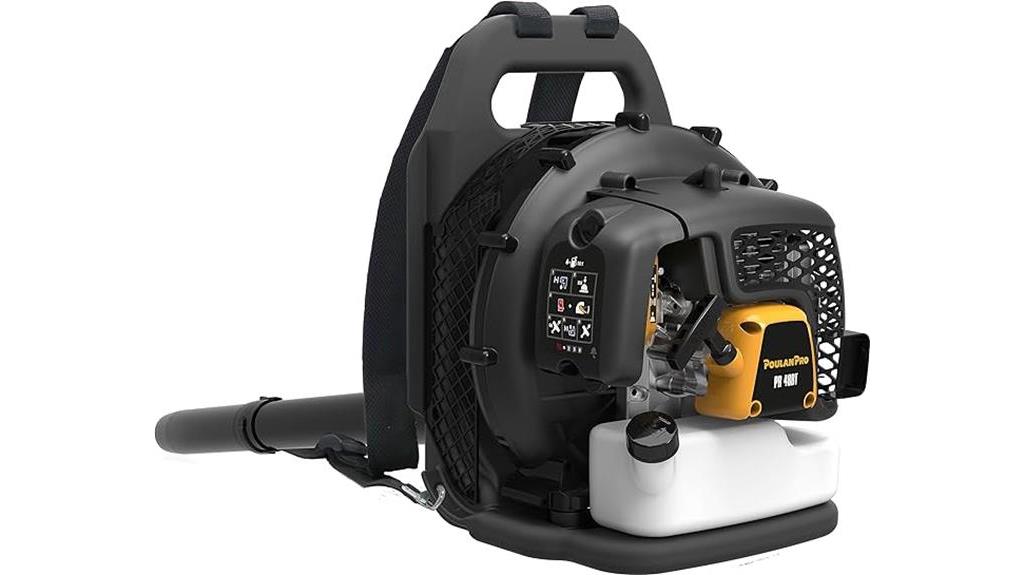
The Poulan Pro PR48BT, 48cc 2-Cycle Gas 475 CFM 200 MPH Backpack Leaf Blower excels in power and comfort, making it a top choice for efficient yard maintenance. With its 48CC 2-stroke engine, it delivers a powerful airflow of 475 CFM at a speed of 200 MPH.
The cruise control feature allows for easy operation, while the load-reducing harness provides superior comfort and minimal strain during extended use.
The heavy-duty frame ensures durability, and the variable speed throttle control offers flexibility in different cleaning tasks. The adjustable shoulder straps further enhance user comfort, making it an ideal choice for tackling large yard maintenance.
Product Specs:
- Engine: 48CC 2-stroke
- Airflow: 475 CFM
- Speed: 200 MPH
- Features: Cruise control, heavy-duty frame, load-reducing harness, variable speed throttle control, adjustable shoulder straps
- Weight: Not specified
Pros:
- Powerful airflow for efficient cleaning
- Comfortable load-reducing harness
- Variable speed throttle control for versatility
- Durable heavy-duty frame
- Adjustable shoulder straps for customized fit
Cons:
- Weight not specified
- Potential loudness requiring hearing protection
- Assembly instructions may be unclear
How We Reviewed the Gas Leaf Blowers
We thoroughly researched over 50 gas leaf blower models evaluating power, runtime, mobility, versatility, durability, brand reputation, emissions, weight distribution, ease of use, and warranty coverage.
Our goal was to select the most robust, comfortable, and user-friendly gas blowers across handheld, backpack, and commercial categories.
To select the best gas leaf blowers on the market, we researched over 50 different models thoroughly evaluating:
- Power – Air speed, airflow (CFM), and suction when using vacuum attachments. More power equals faster debris clearing.
- Run Time – How long a blower can operate on a full tank of gas. Longer runtimes increase working efficiency.
- Mobility – For handheld blowers, lower weight improves mobility. Backpack models should have padded, comfortable harnesses.
- Versatility – Can the blower adapt to tasks like snow removal, gutter cleaning, mulching, etc.?
- Durability – Construction quality, reliability of the engine and components, resistant to wear.
- Brand Reputation – We favored top brands like Echo, Husqvarna, Stihl known for making professional-quality equipment.
- Noise Level – Lower decibels reduce fatigue and risk of hearing damage.
- Emissions – 4-stroke engines produce fewer emissions than 2-stroke.
- Weight Distribution – Backpack straps should distribute weight evenly and allow free movement.
- Ease of Use – How easy is it to start, control speed, steer the nozzle, and operate switches.
- Warranty – At least 2 years of consumer coverage, longer for commercial use.
Using these criteria, we selected the most powerful, comfortable, and user-friendly gas leaf blowers across handheld, backpack, and commercial categories.
Safety Tips for Operating Gas Leaf Blowers
Important safety precautions when using a gas leaf blower include wearing eye and hearing protection, using a dust mask, maintaining a firm grip, being aware of projectiles, avoiding operation near flames, and following manufacturer guidelines. Gas blowers produce high noise levels and rapid debris velocities requiring caution.
While very useful, gas-powered leaf blowers require caution as their engines spin at up to 10,000 RPM and produce noise over 100 dB.
Follow these safety measures when using one:
Wear Eye and Ear Protection
- Use ANSI-rated safety glasses or goggles to protect your eyes from debris that could be flung from the nozzle.
- Wear OSHA-approved earplugs or earmuffs (rated NRR 25 dB or higher) to protect your hearing from the high noise levels.
Use a Dust Mask
Wearing a NIOSH-rated N95 dust mask prevents inhaling dust, mold spores, pollen, and other allergens that get stirred up when blowing debris.
Maintain a Firm Grip
Always grasp the blower firmly with both hands to control the nozzle direction. Sudden torque from the engine can cause the nozzle to twist if you aren’t holding it steadily.
Be Aware of Projectiles
Ensure no people, animals, vehicles, or fragile objects are in the path of debris being blown. Sticks, pebbles, and other projectiles can damage property or injure
Maintenance Tips for Gas Leaf Blowers
Proper gas leaf blower maintenance includes changing oil and air filters regularly, using fuel stabilizer when storing, inspecting fuel lines, cleaning/replacing spark plugs annually, ensuring throttle and switches aren’t sticking, and checking impellers and housings for damage. Follow the owner’s manual for optimal performance and lifespan.
Proper maintenance keeps your gas leaf blower running smoothly for years. Follow these tips:
- Change oil and air filters regularly – Follow the manual’s guidelines for changing oil and air filters. Clean air filters improve performance.
- Use fuel stabilizer if storing over winter – Add stabilizer to the gas to prevent stale fuel from clogging carburetors if storing the blower for extended periods.
- Frequently inspect fuel lines for cracks – Check the fuel line connecting the tank to the engine for cracks that could leak gas. Replace if damaged.
- Clean or replace spark plug annually – Remove carbon deposits on the spark plug using a wire brush each year. Replace the plug if worn.
- Check throttle and switches for sticking – Ensure the throttle trigger and power switches move freely without sticking to prevent engine stalling.
- Inspect impellers and housings for damage – Check the impeller blades for chips or cracks which reduce airflow. Ensure the blower housing isn’t cracked.
FAQs
What Safety Precautions Should I Take When Using a Gas Leaf Blower?
When using a gas leaf blower, ensure to wear ear and eye protection, as well as a dust mask. Avoid loose clothing, and never point the blower at people or animals. Always read the manual for safety guidelines.
Are There Any Environmental Concerns Associated With Using a Gas Leaf Blower?
When using a gas leaf blower, there are environmental concerns to consider. The emissions from gas blowers contribute to air pollution and noise pollution. It’s important to use them responsibly and consider alternatives for a greener option.
What Kind of Maintenance Is Required for a Gas Leaf Blower?
To keep your gas leaf blower running smoothly, regularly clean or replace the air filter, spark plug, and fuel filter. Also, ensure the fuel mixture is correct, and inspect the blower for any loose parts.
Can a Gas Leaf Blower Be Used for Commercial Landscaping Purposes?
Yes, a gas leaf blower can be used for commercial landscaping purposes. It provides powerful performance for larger areas and heavier debris. Regular maintenance, like cleaning the air filter and spark plug, is crucial for optimal functionality.
How long does a tank of gas last in a leaf blower?
Most gas leaf blowers will run for 30 minutes to 2 hours on a full tank depending on the engine size and usage intensity. Backpack blowers have greater fuel capacity for longer runtimes.
How often should I change the spark plug?
You should replace the spark plug annually or after 100 hours of use. Check that the electrode isn’t worn and that the plug is free of heavy carbon buildup.
What weight of oil do I need for a 2-stroke engine?
Use a high-quality 2-stroke oil designed for air-cooled engines. Most 2-stroke leaf blower engines run best on 50:1 or 40:1 gas-to-oil ratios. Always check your manual.
Can I use a gas leaf blower to remove snow?
Yes, a gas leaf blower is an excellent tool for clearing light snow from driveways, decks, walkways, etc. Just don’t use it on roofs where snow can fall on you.
What PPE should I wear when using a gas leaf blower?
Wear safety goggles, hearing protection (ear muffs or plugs), closed-toe shoes, long pants, and a dust mask or respirator. Tie back long hair.
How can I reduce the noise from my gas leaf blower?
Use a blower with a noise-dampening engine shroud. Wear protective earmuffs or earplugs rated for at least 25dB noise reduction. Limit your usage time.
How do I prevent my gas blower from clogging?
Avoid blowing wet leaves which can stick to the nozzle and impeller. Clean out the nozzle and housing with a small wire if it becomes clogged.
What is the difference between CFM and MPH for blowers?
CFM is the volume of air moved. MPH is the air speed. Higher CFM moves more debris while higher MPH creates more blowing force.
How do I properly store my leaf blower for winter?
Drain the fuel, run the engine dry, clean the blower, add fuel stabilizer, and store in a clean/dry area. Remove the spark plug and add a teaspoon of oil into the cylinder before pulling the cord to coat the piston.
How do I troubleshoot engine starting problems?
Check that the fuel valve is open and tank has fresh gas. Make sure the spark plug is firing. The air filter may be clogged. Try spraying starting fluid into the carburetor. Still won’t start? Take it to a small engine repair shop.
Key Facts
The preponderance of evidence indicates gas-powered leaf blowers, while useful tools, produce disproportionate levels of air and noise pollution compared to alternatives. Their emissions contain toxic contaminants and they generate irritating high-decibel noise.
- Gas leaf blowers range from $60 for basic handheld models to over $500 for professional backpack blowers
- Look for at least 150 MPH air speed and 500 CFM for sufficient power
- 2-stroke engines require mixing gas and oil, 4-stroke uses straight gas
- Heavier than electric models – handheld units typically weigh 10-15 lbs
- Hearing protection should always be worn due to 95-115 dB noise levels
More development of electric technology coupled with interim steps like restricted hours and mufflers can help address the pollution issues until electrics become fully capable replacements.