


If you’re a professional, or into DIY projects, power tools are your best friends. They make cutting, drilling, and sanding a breeze.
Whether you’re a beginner or a seasoned pro, understanding the different types of power tools and their accessories is key to getting the job done right.
Power tools are tools that use an external power source like electricity, compressed air, or combustion to operate. Unlike manual hand tools, power tools utilize the power from motors, engines, or compressed air to complete tasks like drilling, cutting, sanding, grinding, and more.
Power tools increase efficiency, make difficult jobs easier, improve precision, and allow workers to accomplish projects they couldn’t do with just hand tools.
Common power tools include drills, saws, sanders, grinders, nail guns, routers, planers, jointers, lathes, and more. From home DIY projects to large-scale construction, power tools are a staple in workshops and job sites.
In this article, we’ll explore the major types of power tools, their safety considerations, and the top brands to consider for your next project.
Key Takeaways
- Power tools make work easier and more efficient
- They offer a wide range of capabilities
- Power tools enhance productivity and precision in various industries
- Power tools can be utilized across various applications, making them versatile
Power Tools Description?
Power tools are mechanical devices that utilize motors, engines, or compressed air to operate tools like drills, saws, sanders, and more. Power tool motors range from small, lightweight motors used in portable handheld tools to large, powerful motors in stationary equipment.
Power tools require an energy source like electricity from a wall outlet or battery, fuel such as gasoline, or compressed air.
Compared to manual tools, power tools allow the operator to apply greater force, speed, and precision in completing tasks like drilling, cutting, grinding, fastening, polishing, and shaping various materials. Power tools increase productivity and make tough jobs easier.
Power Tools Definition?
Power tools are defined as tools that use an external power source such as an electric motor, internal combustion engine, or compressed air supply rather than being powered solely by hand.
Power tools utilize energy from electricity, battery, gasoline, propane, or compressed air to operate equipment such as drills, saws, sanders, nail guns, routers, planers, grinders, and more.
The key aspect that distinguishes power tools from manual hand tools is the incorporation of a power source that allows the operator to complete tasks with greater force, speed, efficiency, and precision.
Power tools are indispensable in construction, manufacturing, maintenance, and home improvement projects.
Let’s start by understanding the significance of power tools in various industries. These tools are designed to make your work easier and more efficient, offering a wide range of capabilities.
From portable to stationary and pneumatic types, power tools play a crucial role in driving productivity and precision in your tasks.
Importance of Power Tools

- Efficiency
- Versatility
- Power
- Precision
Moving from the overview of major types, a key aspect of power tools is their ability to improve efficiency, versatility, power, and precision in a wide range of tasks. When considering the importance of power tools, it’s crucial to recognize the following:
Efficiency benefits:
- Power tools streamline tasks, saving time and effort.
- They enable quicker completion of projects, resulting in increased productivity.
Precision tools:
- Power tools offer accuracy and consistency, ensuring high-quality work.
- Versatility in usage:
- These tools can be utilized across various applications, making them indispensable for different projects.
Understanding the importance of innovation, as well as power tool safety, is vital for harnessing the full potential of these tools. By prioritizing these aspects, you can maximize the benefits and achieve optimal outcomes.
Major Types of Power Tools
When selecting power tools for your projects, it’s important to understand the major types available and their specific uses.
Major Types of Power Tools are:
- Portable
- Stationary
- Pneumatic
You can categorize power tools into three major types: portable, stationary, and pneumatic.
Compared to manual tools, power tools offer increased efficiency, precision, and reduced physical strain.
Understanding the applications of each type of power tool is crucial for efficient power tool selection.
It also enables you to take appropriate tool maintenance and safety precautions. Additionally, being familiar with the various power tool applications can aid in making informed tool brand comparisons.
Portable Power Tools
Portable power tools are a game-changer for any project. These handheld tools, like drills and circular saws, offer the flexibility to work in various locations. Plus, they provide ease of use and versatility.
However, it’s crucial to keep safety in mind.
Definition: Handheld, portable tools powered by electricity or batteries
When using power tools, you’ll appreciate the convenience and versatility of handheld, portable tools powered by electricity or batteries, also known as Portable Power Tools. These tools offer various benefits, such as:
- Power tool maintenance
- Regular maintenance ensures optimal performance and longevity of your power tools.
- Battery technology
- Advancements in battery technology have led to longer run times and quicker charging, enhancing the efficiency of portable power tools.
- Ergonomic design
- Ergonomically designed portable power tools reduce user fatigue and improve overall comfort during extended use.
Innovation in power tool design and technology continues to enhance user experience, and efficient tool storage solutions further contribute to the usability and longevity of these essential devices.
Examples: drills, circular saws, sanders, grinders, etc
You can find a variety of portable power tools, including drills, circular saws, sanders, and grinders, for your construction and DIY projects.
When using drills, always prioritize safety by wearing protective gear, ensuring proper ventilation, and using the right accessories for the task at hand.
Circular saws require regular maintenance to keep them in optimal condition, such as keeping the blade sharp and lubricating the moving parts.
Sanders is great for beginners due to their ease of use and versatility in smoothing surfaces and removing paint.
When it comes to grinders, having the right accessories like different types of discs and guards is essential for various applications.
Stay updated on power tool innovations to take advantage of new features and improved safety measures for enhanced efficiency and performance.
Benefits: Mobility, ease of use, versatility
For optimal performance and convenience, prioritize selecting power tools that offer mobility, ease of use, and versatility. When considering portable power tools, here are some key benefits to keep in mind:
Mobility Benefits
- Allows you to work in various locations, including tight spaces and remote areas.
- Enables easy transportation between job sites or work areas.
- Offers the flexibility to move around without being restricted by cords or power sources.
Ease of Use Advantages
- Reduces physical strain and fatigue during extended use.
- Enhances control and maneuverability for precise and accurate work.
- Simplifies tool operation, making it accessible for users of varying skill levels.
Versatility Applications
- Accommodates a wide range of tasks and applications, making it a versatile tool for different projects.
- Supports various attachments and accessories, expanding its functionality for diverse work requirements.
- Enables efficient multitasking and diverse work approaches, enhancing productivity and creativity.
Safety considerations: Proper handling, storage, PPE, avoiding hazards
Discussing the importance of safety considerations when handling portable power tools is essential for ensuring a secure and efficient work environment. Proper handling, hazard prevention, and the use of personal protective equipment (PPE) are crucial aspects of using power tools safely.
Always follow the manufacturer’s guidelines for proper handling and storage precautions to prevent accidents and prolong the tools’ lifespan.
Additionally, wearing the appropriate PPE, such as safety glasses, gloves, and hearing protection, is essential to minimize the risk of injuries. Regular safety training is also vital to ensure that workers are aware of potential hazards and know how to use power tools safely.
Stationary Power Tools
Now let’s talk about stationary power tools.
These tools are fixed in place and offer high power and precision.
Examples include:
- Table saws
- Band saws
- Drill presses
- Jointers.
Definition: Fixed tools that provide high power and precision
You can rely on stationary power tools for high-powered and precise performance. When it comes to maintaining these tools, regularly check and lubricate moving parts, and ensure the power source is in good condition.
Keep an eye out for innovations such as advanced blade guard systems and improved dust collection mechanisms. Follow safety guidelines, including wearing appropriate protective gear and using tools according to their intended purpose.
For optimal battery performance, choose high-quality batteries and store them properly. When selecting stationary power tools, consider factors such as motor power, precision features, and compatibility with accessories.
Examples: table saws, band saws, drill presses, jointers, etc
When using stationary power tools such as table saws, band saws, drill presses, and jointers, ensure that the power source is in good condition to maintain high-powered and precise performance. Regular maintenance is crucial for optimal functionality.
Clean and lubricate moving parts, check for any loose components, and calibrate the tools as per the manufacturer’s guidelines.
When comparing these tools, consider factors like power, accuracy, and versatility to choose the best fit for your needs.
Always adhere to safety precautions, including wearing appropriate protective gear and using push sticks or push blocks.
These tools excel in various applications such as woodworking, metalworking, and construction.
Stay updated on upcoming technology to benefit from advancements in features like improved dust collection systems, enhanced safety mechanisms, and digital precision controls.
Benefits: Power, precision, stability, large workpieces
Stationary power tools offer significant power, precision, stability, and the capacity to handle large workpieces. These tools provide unparalleled benefits, including:
Power and efficiency
- Stationary power tools are equipped with robust motors that deliver high torque, enabling efficient material removal and cutting through dense materials effortlessly.
Precision and accuracy
- The stationary design, along with adjustable fences and guides, ensures precise and accurate cuts, holes, and shaping, crucial for professional craftsmanship.
Stability and control
- The sturdy construction and fixed position of stationary power tools provide stability, minimizing vibrations and enhancing control for intricate and detailed work.
These benefits make stationary power tools indispensable for woodworking and metalworking tasks, offering unmatched handling and safety precautions for working with heavy and large workpieces.
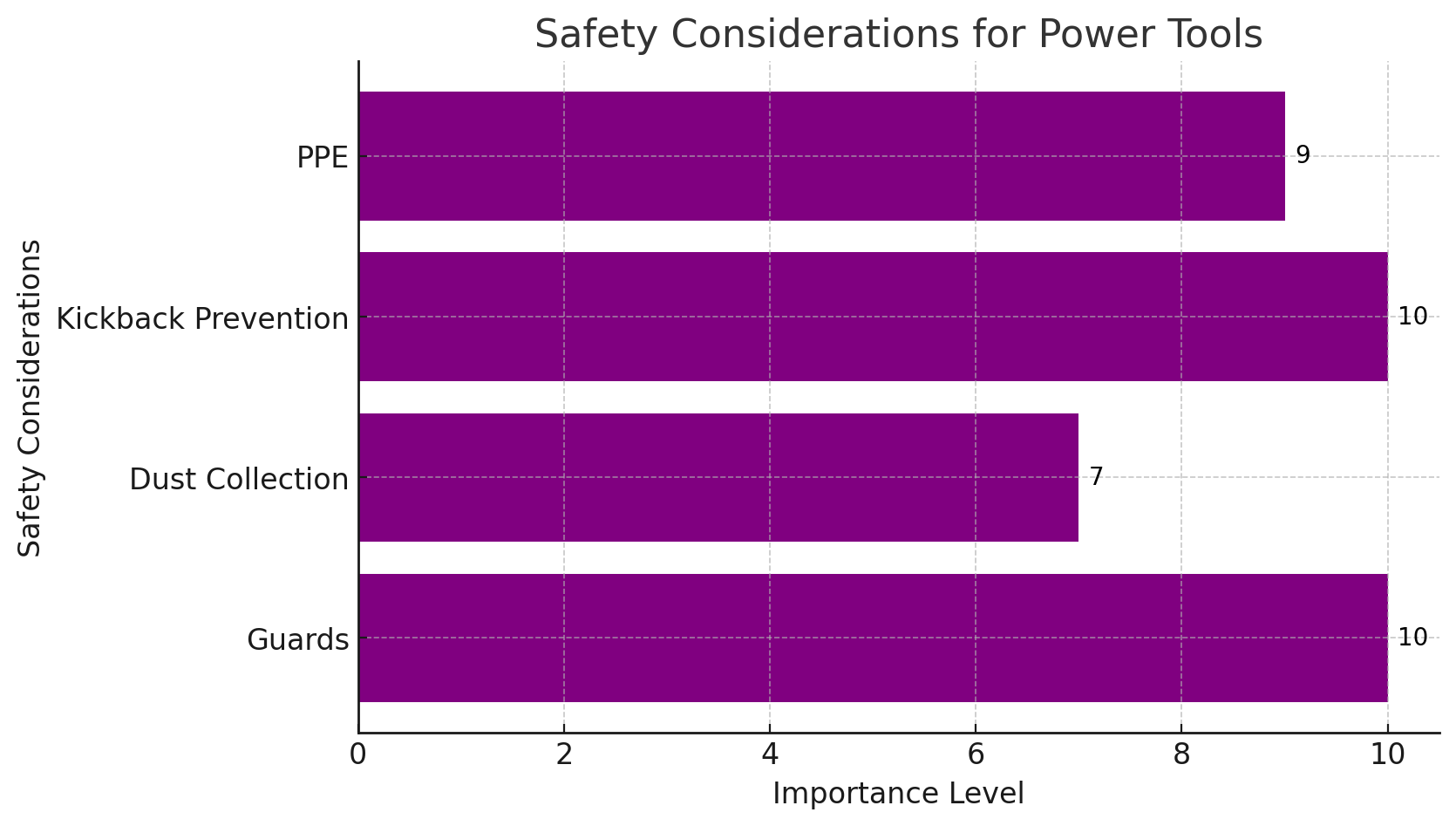
Safety considerations: Guards, dust collection, avoid kickback, PPE
To ensure safety when using stationary power tools, it is essential to pay close attention to the guards, dust collection system, and the prevention of kickback, as well as the use of proper personal protective equipment (PPE).
Guards are crucial safety features that help prevent accidental contact with the tool’s moving parts, reducing the risk of injury. A well-functioning dust collection system not only promotes a clean working environment but also mitigates health concerns associated with airborne particles.
Kickback prevention measures are vital for avoiding potential injuries. Adhering to PPE requirements, such as wearing protective gear like safety goggles, gloves, and hearing protection, further enhances safety. R
egular tool maintenance not only ensures longevity and efficiency but also contributes to a safer working environment.
| Safety Considerations | Description | Importance |
|---|---|---|
| Guards | Prevents contact with moving parts | High |
| Dust Collection | Reduces airborne particles | Medium |
| Kickback Prevention | Avoids potential injuries | High |
Pneumatic Power Tools
Now let’s talk about pneumatic power tools. These tools are powered by compressed air and include nail guns, impact wrenches, ratchets, and air saws.
They offer high torque and power in a compact size, but it’s important to consider safety factors when using them. These include noise, air pressure, hoses, and personal protective equipment.
Using pneumatic power tools can be noisy, so it’s important to wear hearing protection to prevent damage to your ears.
Air pressure is another important factor to consider. Make sure the air pressure is set correctly for the specific tool you are using.
Hoses should be properly connected and in good condition to avoid any leaks or accidents.
Lastly, always wear appropriate personal protective equipment such as safety glasses, gloves, and a mask when using pneumatic power tools.
Following these safety guidelines will help ensure the safe and productive use of pneumatic power tools.
Definition: Tools powered by compressed air
Pneumatic power tools are commonly used in the construction and automotive industries for their versatility and power. These tools are powered by compressed air, which is generated by an air compressor.
Here are some key points to consider about pneumatic power tools:
- Efficient Power Source: Compressed air provides a reliable and efficient power source for pneumatic tools.
- Reduced Risk of Overheating: Unlike electric power tools, pneumatic tools are less likely to overheat during extended use.
- Consistent Performance: Compressed air ensures consistent and reliable performance, making pneumatic tools suitable for heavy-duty tasks.
- Versatile Applications: Pneumatic tools are widely used for tasks ranging from assembly and fastening to sanding and painting.
Pneumatic power tools, also known as air-powered tools, offer a range of benefits due to their reliance on compressed air.
Examples: nail guns, impact wrenches, ratchets, air saws
You can find a variety of pneumatic power tools in the market, including nail guns, impact wrenches, ratchets, and air saws.
Impact drivers are known for their versatility, making them suitable for various tasks from driving screws to drilling holes.
Air saws offer exceptional cutting power, making them ideal for precision cutting in woodworking and metalworking.
Nail guns are valued for their fastening efficiency, significantly speeding up tasks like framing and roofing.
Ratchets are perfect for precision fastening in automotive and mechanical applications.
When using these tools, it’s crucial to consider power tool accessories and safety considerations to ensure safe and efficient operation.
Always follow the manufacturer’s guidelines and use appropriate safety gear to prevent accidents and injuries.
Benefits: High torque, power in compact size
The high torque and compact size of pneumatic power tools make them highly beneficial for a wide range of applications, offering exceptional power and maneuverability.
When it comes to pneumatic power tools, you can benefit from:
- High Torque: Pneumatic tools deliver impressive torque, making them ideal for heavy-duty tasks that require substantial power.
- Efficiency: The combination of high torque and compact size ensures efficient operation, allowing you to complete tasks quickly and effectively.
- Safety Considerations: Despite their power, pneumatic tools are designed with safety in mind, with features such as ergonomic grips and safety triggers to minimize the risk of accidents.
- Future Innovation: Manufacturers continue to innovate pneumatic tools, enhancing their capabilities and introducing new features for even greater efficiency and performance.
With pneumatic power tools, you can enjoy the benefits of superior power and maneuverability while also considering efficiency, safety, and future innovations.
Safety considerations: Noise, air pressure, hoses, PPE
When considering safety considerations for pneumatic power tools, it’s important to be mindful of the potential hazards associated with noise pollution, workplace communication, air pressure regulations, personal protective equipment (PPE) standards, and hose maintenance tips.
Noise pollution from pneumatic tools can lead to hearing damage, so it’s crucial to use hearing protection such as earplugs or earmuffs. Additionally, ensure that workplace communication isn’t compromised by the noise level.
Adhering to air pressure regulations is essential to prevent equipment malfunctions and accidents. Always follow recommended personal protective equipment standards to safeguard against flying debris, dust, and other potential hazards.
Proper hose maintenance, including regular inspections for wear and tear, kinks, or leaks, is vital for preventing accidents and maintaining tool functionality.
Prioritize safety by staying informed and proactive in addressing these considerations.
Common Uses of Power Tools

You can use power tools for a wide range of tasks.
Cutting tasks, such as saws, grinders, and shears, are common uses for power tools.
Additionally, drilling, fastening, shaping, finishing, and demolition tasks can also be efficiently handled with power tools.
Cutting: Saws, grinders, shears
For cutting tasks, power tools such as saws, grinders, and shears are essential equipment in your workshop. Here’s what you need to know:
Saws
- Prioritize safety when using saws, always wear protective gear and follow the manufacturer’s instructions for safe operation.
Grinders
- Regular maintenance is crucial for grinders to ensure their longevity and optimal performance. Cleaning and inspecting the grinder regularly can prevent malfunctions.
Shears
- Innovation in shears has led to increased precision in cutting. Explore the latest shears with advanced features for more efficient and accurate cutting tasks.
When it comes to power tools, consider the advantages of cordless options for increased mobility and convenience compared to corded tools.
Drilling and fastening: Drills, screwdrivers, impact drivers
Drills, screwdrivers, and impact drivers are essential tools for various drilling and fastening tasks in your workshop.
When using power tools for drilling and fastening, it’s important to understand the different applications and techniques to ensure efficiency and safety.
Here are some key points to consider:
| Topic | Description |
|---|---|
| Drill accessories, maintenance | Choose the right drill bits and regularly lubricate moving parts to prolong the tool’s lifespan. |
| Impact driver applications, tips | Ideal for heavy-duty fastening tasks, use impact-rated sockets and bits for optimal performance. Additionally, apply firm pressure to prevent cam-out. |
| Screwdriver selection, techniques | Select the appropriate screwdriver type and size for the screw, and apply consistent pressure and speed while driving the screw. |
Understanding the proper accessories, maintenance, applications, and techniques for drills, impact drivers, and screwdrivers is crucial for efficient and safe drilling and fastening tasks.
Shaping/finishing: Sanders, planers, routers, lathes
Sanding, planing, routing, and turning are common uses of power tools for shaping and finishing wood and other materials. When engaging in shaping/finishing tasks, it’s crucial to consider material selection, as different tools are suitable for specific materials.
Surface preparation is key to achieving smooth and even finishes, requiring proper sanding and planing techniques. Additionally, regular tool maintenance is essential to ensure optimal performance and longevity of sanders, planers, routers, and lathes.
When it comes to finishing techniques, understanding how to achieve the desired texture and appearance is vital. Lastly, always prioritize safety precautions when operating these power tools to prevent accidents and injuries.
Demolition: Jackhammers, hammer drills, chipping hammers
When demolishing, jackhammers, hammer drills, and chipping hammers are essential power tools for breaking and removing materials efficiently.
To ensure safety when using a jackhammer, always wear personal protective equipment, secure the work area, and inspect the tool for any damage before operation.
Hammer drills are versatile, suitable for drilling into hard materials like concrete, and can also be used for light demolition work.
Regular maintenance of chipping hammers is crucial for optimal performance; keep the tool clean, and lubricated, and inspect the chisel for wear.
When selecting demolition tools, consider the scope of the project, material hardness, and ergonomics for user comfort.
Innovations in power tools have led to improved efficiency, reduced vibration, and enhanced safety features, making demolition work more manageable and less strenuous.
Power Tool Accessories
Now, let’s talk about power tool accessories.
You’ll find a wide range of accessories that can enhance the functionality of your power tools.
From drill bits and blades to grinding discs and clamps, these accessories allow you to tackle various tasks with ease and precision.
Bits: drill bits, driver bits, hole saws, etc
To properly utilize power tools, you should familiarize yourself with a variety of bits, including drill bits, driver bits, and hole saws, as they are essential power tool accessories.
Drill Bit Materials
- High-Speed Steel (HSS)
- Cobalt Steel
- Carbide Tipped
Choosing the Right Hole Saw
- Consider the material to be cut
- Select the appropriate size
- Look for a saw with a durable design
Impact Driver Features
- Brushless motor for efficiency
- Adjustable torque settings
- Quick-change chucks for versatility
Understanding the characteristics of drill bit materials, choosing the right hole saw, and the features of impact drivers can significantly enhance your power tool experience.
Additionally, investing in quality driver bit sets and mastering drill bit sharpening techniques ensures that your power tools remain effective and reliable.
Blades: different types for different saws and materials
Understanding the versatility of blades is crucial for effectively using different saws and materials with power tools.
When it comes to blade selection, it’s essential to consider the material compatibility and the specific saw types.
Different materials require different cutting techniques, and using the right blade for the job is key to achieving precise and efficient results.
For instance, a high-speed steel blade is suitable for cutting wood and plastic, while a diamond-tipped blade is better suited for cutting through concrete and ceramic tiles.
It’s also important to maintain the blades regularly to ensure optimal performance and longevity. Proper blade maintenance includes cleaning, sharpening, and replacing worn-out blades to guarantee smooth and accurate cuts every time.
Discs: grinding, sanding, cutting, polishing
You can use discs for grinding, sanding, cutting, and polishing as essential power tool accessories.
When it comes to grinding techniques, be sure to select the appropriate disc for the material you’re working with, such as metal or concrete, and consider the disc’s grit size for the desired finish.
For sanding materials, discs come in various grits for different levels of abrasiveness, so choose the right one for the job at hand.
When it comes to cutting applications, discs are designed for specific materials like metal, wood, or masonry, so ensure you have the correct disc for the task.
Finally, for polishing methods, there are discs specifically made for buffing and achieving a smooth, glossy surface.
Don’t forget to explore the wide range of disc accessories available to enhance your power tool’s capabilities.
Clamps, vises, and guides for securing workpieces
When securing workpieces with clamps, vises, or guides, it’s important to ensure they’re firmly and safely held in place during power tool operations. Workpiece stability is crucial for accurate and safe work, and choosing the right clamps is essential.
Different vise types are available for various applications, such as bench vises for general woodworking and metalworking, and pipe vises for plumbing tasks. Workpiece guides aid in maintaining precision and control during cutting, drilling, or shaping.
Understanding securing techniques and best practices is vital to prevent workpiece slippage or movement. Additionally, proper workpiece positioning and alignment strategies contribute to achieving high-quality results.
Power Tool Safety
When using power tools, it’s important to prioritize safety.
Make sure to read the manuals thoroughly before use and wear proper personal protective equipment, such as eye and hearing protection.
Additionally, always ensure good lighting in your workspace, inspect tools before each use, and handle and store them properly when not in use to maintain a safe working environment.
Read manuals thoroughly before use
Be sure to thoroughly review the manuals before using power tools to ensure safety. It’s crucial to understand the safety precautions, as it’s your responsibility as a user to prioritize safety. Proper training and manual comprehension are essential to minimize potential hazards.
To engage the audience, consider the following points:
Safety Precautions
- Always follow the safety guidelines provided in the manual.
- Use the appropriate safety gear such as goggles, gloves, and ear protection.
User Responsibility
- Take the time to understand and follow the instructions in the manual.
- Never operate a power tool if you’re fatigued or under the influence of substances.
Manual Comprehension
- Familiarize yourself with the tool’s features and functions.
- Pay close attention to the warnings and precautions outlined in the manual.
Use proper PPE – eye/hearing protection, dust mask
To ensure your safety while using power tools, it is essential to use proper personal protective equipment (PPE) such as eye and hearing protection, as well as a dust mask.
Safety precautions and hazard avoidance are crucial when operating power tools. Utilizing the right PPE not only protects you from potential injuries but also ensures respiratory protection and hearing conservation.
Below is a table highlighting the importance of using the correct PPE.
| PPE Type | Protection Offered | Importance |
|---|---|---|
| Eye Protection | Prevents eye injuries | Essential for avoiding debris and flying particles |
| Hearing Protection | Prevents hearing damage | Vital for safeguarding against loud tool noises |
| Dust Mask | Respiratory protection | Crucial for filtering out harmful dust and particles |
Ensure good workspace lighting and avoid hazards
You should ensure good workspace lighting and actively avoid hazards when using power tools for a safe and efficient work environment. To achieve this, consider the following:
Workspace ergonomics
- Organize your tools and materials to minimize reaching and bending.
- Use ergonomic power tools with comfortable grips to reduce strain on your hands and arms.
- Ensure proper ventilation to minimize exposure to dust and fumes.
Hazard identification
- Regularly inspect your workspace for potential hazards such as loose cords, slippery floors, or obstructed pathways.
- Follow safety protocols by wearing appropriate clothing and removing any jewelry or loose clothing that could get caught in the tools.
Lighting solutions
- Install bright, shadow-free lighting to illuminate your workspace effectively.
- Consider using portable task lighting for focused illumination on specific work areas.
- Use natural light whenever possible to reduce eye strain and create a pleasant working environment.
Proper handling and storage when not in use
Handling and storing power tools properly when not in use is crucial to maintaining a safe and efficient workspace, minimizing hazards, and ensuring longevity. Proper handling includes using the tools for their intended purpose and following manufacturer guidelines.
When not in use, store power tools in a dry and secure location to prevent damage and unauthorized access. Regular maintenance, such as cleaning and inspecting for wear and tear, is essential for safe operation.
Always follow safety considerations, such as using safety guards and wearing appropriate personal protective equipment. It’s also important to follow best practices, like unplugging tools after use and keeping cords away from sharp edges or heat sources.
Inspect tools before each use and perform maintenance
Before each use, inspect your power tools for any damage or signs of wear and perform necessary maintenance to ensure safe and efficient operation. To help you with this, here are some tips to keep your power tools in top condition:
Inspecting tools:
- Check for loose parts, frayed cords, or any visible damage before plugging in the tool.
- Inspect blades, bits, and other attachments for wear and tear, and replace if necessary.
- Ensure that all safety features, such as guards and safety switches, are working properly.
Developing a maintenance schedule and adhering to a maintenance checklist will contribute to the longevity of your tools and equipment safety.
By incorporating these practices into your routine, you’ll be taking proactive steps to ensure that your power tools remain in optimal working condition.
Use tools designed for the task and materials
Select power tools specifically designed for the task and materials you’re working with to ensure safe and efficient operation. Material compatibility is crucial in preventing tool malfunctions and accidents. Always use task-specific tools to ensure precision and safety.
When choosing power tools, consider the nature of the materials you’ll be working with and select the appropriate tools for the job. Prioritize safety precautions by following manufacturer recommendations and guidelines for tool selection.
Regular tool maintenance is essential to prolong the life of the tool and ensure its proper functioning. By adhering to these practices, you can minimize the risk of accidents and injuries while also optimizing the performance of your power tools.
Maintain control and proper footing/balance
To maintain control and proper footing/balance while using power tools, always position yourself securely and firmly before starting the tool.
Ensure proper technique: Use the power tool according to the manufacturer’s guidelines and recommendations to maintain control.
Maintain footing stability: Stand with your feet shoulder-width apart and distribute your weight evenly to ensure stability.
Implement control methods: Keep a firm grip on the tool and use both hands when operating to maintain control and balance.
By adhering to these safety precautions, you can minimize the risk of accidents and ensure a safe working environment.
Key Considerations: Power, Performance, Battery Platform, Cost
Considering power, performance, battery platform, and cost, it’s important to assess these factors when evaluating power tool brands.
Power tool innovation is a key aspect to consider, as top brands constantly strive to improve their products through advancements in motor technology and efficiency.
Battery technology is also crucial, with lithium-ion batteries offering longer run times and faster charging capabilities.
When evaluating brands, look for cost-effective options that provide exceptional performance.
Performance testing is vital to ensure the tools meet the demands of various applications.
Additionally, consider the ease of power tool maintenance, as brands that offer simple maintenance procedures can save time and money in the long run.
Cordless vs Corded Power Tools
How do cordless and corded tools compare in terms of power, versatility, and convenience?
Cordless Tools
- Power Source: Cordless tools are powered by rechargeable batteries, offering the flexibility to work in remote locations without access to power outlets.
- Battery Life: The battery life of cordless tools has significantly improved, providing longer operational durations to handle extensive tasks.
- Mobility: Cordless tools offer unparalleled mobility, allowing you to move freely without being hindered by cords or cables.
When comparing performance, corded tools are generally more powerful due to a consistent power source. However, cordless tools have made substantial advancements and can now compete favorably in most applications, offering unmatched convenience and portability for users.
Professional vs DIY
In the realm of power tools, professional brands, and DIY brands offer distinct features and capabilities that cater to different user needs. When comparing professional quality, professional brands tend to prioritize durability and performance, making them suitable for heavy-duty use.
DIY brands, on the other hand, are designed for occasional use and are generally more cost-effective. In terms of warranty comparison, professional brands often offer longer and more comprehensive warranties, reflecting their confidence in the durability of their products.
DIY brands may offer shorter warranties, with a focus on affordability. User reviews for professional brands often highlight their exceptional performance and longevity, while DIY brands are often praised for their cost-effectiveness.
Here’s a comparison table to help you understand the differences:
| Aspect | Professional Brands | DIY Brands |
|---|---|---|
| Professional Quality | High | Standard |
| Durability | Excellent | Moderate |
| Warranty | Longer, comprehensive | Shorter |
| Cost Effectiveness | Generally higher cost | More affordable |
| User Reviews | Emphasize performance and longevity | Highlight affordability |
Power Tools Examples
The main purpose of showing power tool examples is educational – to enhance knowledge about the range of power tools available and their functions.
By highlighting various power tools like drills, saws, sanders, grinders, routers, and more through descriptions and images, readers can gain a comprehensive introduction.
The examples aim to demonstrate the versatility of power tools, their capabilities, and limitations, and help guide proper selection and usage.
Whether for DIY, construction, woodworking, or metalworking, these power tool examples provide valuable references for understanding the diversity of electric and pneumatic tools that can facilitate an array of tasks with greater efficiency.
Equipped with this introductory knowledge, readers can make informed decisions when choosing power tools suitable for their needs and projects.
Here is a comprehensive list of power tools categorized by type: Portable Power Tools ● Drills – hammer drills, impact drivers, screwdrivers ● Saws – circular saws, reciprocating saws, jigsaws ● Sanders – orbital sanders, belt sanders, random orbital sanders ● Grinders – angle grinders, die grinders ● Routers ● Planers ● Rotary tools ● Nail guns Cordless Power Tools ● Drills ● Impact drivers ● Hammer drills ● Circular saws ● Reciprocating saws ● Jigsaws ● Angle grinders ● Sanders ● Rotary tools ● Nail guns Corded Power Tools ● Circular saws ● Reciprocating saws ● Jigsaws ● Angle grinders ● Sanders ● Routers ● Planers ● Drills ● Screwdrivers ● Grinders Industrial/Professional Power Tools ● Table saws ● Band saws ● Miter saws ● Radial arm saws ● Drill presses ● Jointers ● Planers ● Lathes ● Milling machines ● Grinders ● Saws DIY/Home Use Power Tools ● Cordless drill/driver kits ● Oscillating multi-tools ● Random orbital sanders ● Jigsaws ● Circular saws ● Reciprocating saws ● Rotary tools ● Angle grinders ● Routers ● Nail guns
Power Tools List PDF
The power tools list PDF provides descriptions of common power tools to enhance knowledge. It covers corded and cordless electric tools, as well as pneumatic tools. The list details drills, saws, sanders, nail guns, and more.
It includes best practices for safe operation and maintenance. The power tools list serves as a useful reference for learning about and properly using power tools whether you’re a home DIYer or professional contractor. It’s a long list you can download it from the below button.
Frequently Asked Questions
What Are Power Tools Used For?
Power tools are essential items for construction projects, home improvement tasks, woodworking, metalworking, automotive repairs, and various hobbies and crafts. With the right power tools, jobs get completed faster, with more precision, and with less physical effort compared to using manual tools.
Some of the most common uses of power tools include:
- Drilling holes – Power drills allow you to bore holes into wood, metal, concrete, and other materials. They are available in corded and cordless battery-powered options. Hammer drills have a hammering action for masonry drilling.
- Cutting materials – Saws like circular saws, miter saws, and jigsaws utilize electric motors to cut through wood, metal, tiles, and plastics. Table saws have circular blades to rip and crosscut lumber and sheet goods.
- Sanding and grinding – Power sanders and grinders use abrasives to smooth and shape workpieces. Belt sanders, orbital sanders, and angle grinders are popular choices.
- Fastening – Nail guns, staplers, and impact drivers exponentially speed up nailing, stapling, and driving screws. They’re indispensable for framing, trimming, building decks, fencing, and other carpentry work.
- Routing and planning – Routers cut grooves and shaped edges into wood and laminates. Planers thickness and flatten boards. These tools augment manual hand planes.
- Metalworking – Angle grinders cut, grind, and polish metal. Die grinders smooth welds and polish in tight spots. Metal cutting saws slice through steel.
- Yard and Garden – String trimmers, hedge trimmers, chainsaws, rototillers, and lawn mowers harness gas or electric power for maintaining lawns and landscaping.
With innovative battery technology and precision engineering, power tools are stronger, lighter, and more versatile than ever. DIYers and professionals alike rely on power tools to save time and simplify all kinds of jobs.
What Are the Most Common Maintenance Tasks for Power Tools and How Often Should They Be Performed?
You should perform maintenance tasks like proper lubrication, tool calibration, and inspection checklists regularly to ensure your power tools work efficiently. Follow maintenance schedules and replace components as needed to avoid breakdowns.
Are There Any Specific Safety Precautions to Be Aware of When Using Power Tools in Extreme Temperatures or Weather Conditions?
When using power tools in extreme temperatures or weather conditions, it’s crucial to be aware of specific safety precautions. Check for potential hazards, wear appropriate gear, and ensure proper tool functionality to stay safe.
What Are Some Lesser-Known Power Tool Accessories That Can Greatly Improve Performance or Versatility?
To boost versatility and enhance performance, consider innovative attachments and hidden gems for efficiency improvements. These lesser-known power tool accessories can greatly improve your work and expand the capabilities of your tools.
Can Power Tools Be Used for Environmentally Friendly or Sustainable Projects, and if So, What Are the Best Practices for Doing So?
To create eco-friendly projects and sustainable practices, you can use energy-efficient tools for green construction. Consider the environmental impact of your power tool use and opt for sustainable materials and processes.
Are There Any Emerging Power Tool Brands or Technologies That Consumers Should Keep an Eye on in the Coming Years?
Keep an eye out for emerging power tool brands and advanced technologies. Innovative designs and cutting-edge features are shaping future trends. Stay on top of the latest developments to level up your projects.
What is the Best Way to Use Power Tools for Beginners?
To understand it please watch the video below:
Key Facts
The importance of safety and responsible use cannot be emphasized enough. Always prioritize safety when using power tools, as they can be dangerous if not handled properly. Make sure to read and follow the manufacturer’s instructions, wear appropriate protective gear, and use the tool in a well-ventilated area.
You should regularly inspect and maintain your power tools to ensure safe and efficient operation. When considering power tools, keep in mind the following key facts:
Efficiency and Versatility
- Choose tools that offer multiple functions to increase efficiency and save space in your workshop.
- Look for versatile power tools that can handle various tasks, reducing the need for multiple tools.
Power and Precision
- Prioritize power and precision in your tools to ensure they can handle tough jobs with accuracy.
- Select tools that offer adjustable settings for precise control over the workpiece.
Safety Considerations
- Always follow safety guidelines and use appropriate safety gear when operating power tools.
- Regularly inspect tools for any signs of wear or damage to maintain a safe working environment.
Remember to consider these factors when exploring power tool accessories and reputable power tool brands.
Importance of safety and responsible use
It’s crucial to prioritize safety and responsible use when operating power tools, ensuring that you and others in your workspace are protected from potential hazards.
Implementing safety measures and risk management techniques is essential for accident prevention. Proper training and supervision are vital to ensure that individuals are proficient in handling power tools safely.
Adhering to personal protective equipment (PPE) requirements, such as wearing goggles, gloves, and ear protection, is fundamental for safeguarding against injuries.
Responsible tool use and regular maintenance contribute to a safe working environment and help prevent tool-related accidents.
Furthermore, fostering an important safety culture within your workspace encourages a mindset of vigilance and responsibility, leading to a collective effort to maintain a safe and secure working environment for everyone involved.
Future of power tools: innovation, cordless, “smart” features
What technological advancements are making power tools more innovative, cordless, and equipped with ‘smart’ features?
- Future innovations
- Advancements in battery technology are driving the future of power tools, leading to longer runtimes and faster recharge times.
- Smart features and connectivity are being integrated into power tools, allowing for remote operation and real-time data monitoring.
- Impact on industry, job site efficiency
- These innovations are increasing job site efficiency by providing greater mobility and reducing downtime for recharging or refueling.
- Environmental impact, sustainability
- The shift towards cordless power tools is reducing the reliance on fossil fuels, contributing to a more sustainable and environmentally friendly industry.
These advancements aren’t only shaping the future of power tools but also enhancing the user experience through improved ergonomics and design trends.