

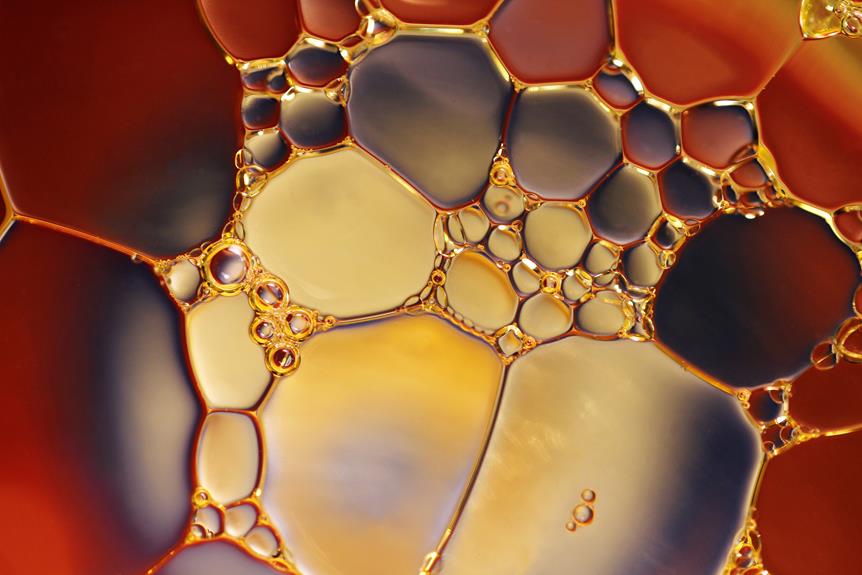
Step into the enigmatic realm of chemistry, where the age-old mystery of the unyielding separation between oil and water awaits unraveling. Despite their ubiquity, these two substances steadfastly resist integration, defying our attempts to create stable mixtures. Their divergent structures and compositions lie at the heart of this captivating phenomenon.
In this article, we will embark on a journey to unveil the secrets behind this refusal, exploring the role of hydrogen bonds and emulsifiers in the potential creation of harmonious solutions. Prepare to be captivated by the intriguing interplay of oil and water.
The Structural Differences: Understanding the Composition of Oil and Water
Oil and water possess distinct structures and compositions. Oil is a non-polar chemical, while water is a polar molecule with hydrogen bonds. The importance of polarity in oil and water composition cannot be understated.
The polar nature of water allows it to form hydrogen bonds, creating a network of tightly knit molecules. On the other hand, oil lacks polarity and does not form hydrogen bonds. This fundamental difference in their structures results in the immiscibility of oil and water.
Another factor that plays a role in their interaction is density. Oil is less dense than water, causing it to float on top of water. The difference in density influences the behavior of oil and water when they come into contact, further contributing to their inability to mix.
Understanding the influences of polarity and density is crucial in comprehending why oil and water refuse to mix.
The Role of Hydrogen Bonds: Why Oil Floats on Water
The presence of hydrogen bonds in water molecules is responsible for the phenomenon of oil floating on water. These hydrogen bonds cause water molecules to be tightly knit together, making water denser than oil.
The buoyancy effect occurs because oil is less dense than water. The hydrogen bonds between water molecules hold them closer together than the bonds between the fatty acid molecules in oil. This density difference causes oil to float on top of water.
The role of intermolecular forces, specifically the differences in polarity between oil and water, is why they don’t mix. Water is a polar molecule with a slightly positive charge on the hydrogen end and a slightly negative charge on the oxygen end.
Oil, on the other hand, is a non-polar chemical with no charge or not enough charge to make the whole molecule polar. These differences prevent oil and water from mixing together seamlessly.
Emulsifiers: How They Help Oil and Water Mix
Emulsifiers play a crucial role in creating stable mixtures of oil and water. These substances have both a hydrophobic end that oil likes and a hydrophilic end that water likes. They break the oil into tiny droplets and disperse them throughout the mixture, preventing the oil droplets from bonding together. This dispersion of oil droplets is what stabilizes the emulsion.
There are different types of emulsifiers, including natural ones like lecithin found in egg yolks, and synthetic ones like polysorbates. The science behind emulsion stability lies in the interaction between the emulsifier and the oil-water interface. The emulsifier forms a protective layer around the oil droplets, preventing them from coalescing and separating from the water. This allows the oil and water to stay mixed for a longer period of time.
Emulsifiers are widely used in various applications, such as salad dressings, mayonnaise, and sauces, where oil and water need to be combined and remain stable.
The Salad Dressing Example: How Oil and Water Can Coexist
In the culinary world, salad dressing serves as a prime example of successfully combining and maintaining the coexistence of oil and water. This delicate balance is achieved through the use of emulsifiers, which prevent the oil and water from separating.
Emulsifiers, such as lecithin or tomato paste, act as stabilizers by coating the oil droplets or binding them to the vinegar, keeping them suspended in the mixture.
To create stable emulsions like salad dressing, proper mixing techniques are crucial. Slowly adding oil while whisking or blending vigorously helps to disperse the oil droplets evenly throughout the mixture, ensuring a smooth and consistent texture.
Achieving the perfect consistency in emulsions requires attention to detail and an understanding of the stability factors involved. With the right emulsifiers and techniques, oil and water can coexist harmoniously in salad dressings and other culinary creations.
Applications in the Kitchen: Mixing Oil and Water for Delicious Results
Emulsions, such as salad dressings, sauces, and mayonnaise, showcase the successful combination of oil and water in the culinary realm. Achieving a stable and homogenous mixture of these two immiscible substances requires the use of proper mixing techniques and emulsifiers.
Emulsifiers play a crucial role in stabilizing these mixtures by having both a hydrophobic end (that oil likes) and a hydrophilic end (that water likes). They break the oil into tiny droplets and disperse them throughout the mixture, preventing them from bonding together. This dispersion allows the oil and water to stay mixed for a considerable amount of time.
Additionally, proper mixing techniques, such as slowly adding oil while whisking or blending vigorously, aid in creating stable emulsions.
The benefits of emulsifiers and mixing techniques result in delicious and visually appealing dishes that combine oil and water seamlessly.
Frequently Asked Questions
Why Do Oil and Water Have Different Structures and Densities?
Oil and water have different structures and densities due to their distinct compositions. Water is a polar molecule with hydrogen bonds that hold it closely together, while oil is non-polar and less dense, causing it to float on top of water.
What Is the Role of Polarity in Oil and Water Not Mixing?
The polarity of oil and water plays a crucial role in their immiscibility. While water is a polar molecule with hydrogen bonds, oil lacks polarity and forms weak intermolecular forces. This fundamental difference prevents them from mixing.
How Do Hydrogen Bonds Contribute to the Floating of Oil on Water?
Hydrogen bonds between water molecules create surface tension, causing them to be tightly knit together. The density difference between oil and water allows oil to float on top. Interfacial tension phenomena contribute to the separation and non-mixing of oil and water.
What Are Emulsifiers and How Do They Help Oil and Water Mix?
Emulsifiers, also known as surfactants, play a significant role in the food industry by aiding the mixing of oil and water. They have hydrophobic and hydrophilic ends that break oil into small droplets and keep them dispersed in water, creating stable emulsions.
Can You Provide Examples of Other Kitchen Applications Where Oil and Water Are Mixed?
Oil and water can be mixed in various kitchen applications, such as salad dressings, mayonnaise, and sauces. Emulsifiers like egg yolks or mustard are used to stabilize these emulsions, ensuring that the oil and water stay mixed for a significant period.
Conclusion
In the intricate dance between oil and water, their refusal to mix has long captivated our curiosity. Like two opposing forces of nature, their distinct structures and compositions create a divide that seems impossible to bridge.
Yet, through the exploration of hydrogen bonds and the ingenious use of emulsifiers, we can unlock the secrets behind their enigmatic relationship. By understanding these mechanisms, we open the door to a world of possibilities, where oil and water can coexist harmoniously, creating innovative solutions and tantalizing flavors.
A captivating dance of integration awaits.