

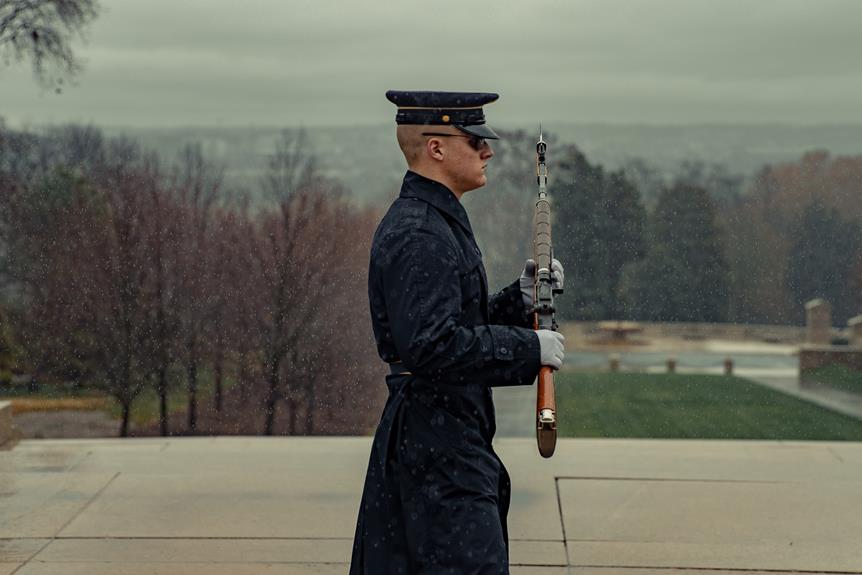
Amidst the grandeur of British tradition, a select group of soldiers stands unwavering, like sentinels of honor and duty.
The Queen’s Guard, hand-picked from elite regiments, symbolizes the unyielding dedication associated with the British monarchy.
Tasked with safeguarding the Queen and her residences, these legendary guardians face daily challenges with stoicism and professionalism.
In this article, we delve into their routine, protocol, and interactions with tourists, shedding light on the extraordinary commitment exhibited by these revered protectors.
The Origins and History of the Queen’s Guard
The Queen’s Guard has a rich history that traces back to its origins in the 17th century. Founded in 1660, the Queen’s Guard initially served as a ceremonial unit responsible for protecting the British monarch and the royal residences. Over the centuries, the Guard’s duties and traditions have evolved, reflecting the changing needs of the monarchy and the nation.
Today, the Queen’s Guard is comprised of soldiers hand-picked from five elite regiments within the British military, including the Grenadier Guards, Coldstream Guards, Scots Guards, Irish Guards, and Welsh Guards. While their primary role is symbolic, with local law enforcement handling security, the Guard’s unyielding dedication to duty remains unchanged.
The evolution of their duties and the preservation of traditions make the Queen’s Guard an integral part of British history and culture.
Selection Process: Becoming a Queen’s Guard
Soldiers who aspire to join the prestigious ranks of the Queen’s Guard must undergo a rigorous selection process that assesses their skills, discipline, and suitability for the role. The recruitment process for the Queen’s Guard involves several stages, including initial screening, aptitude tests, interviews, and physical fitness assessments.
Candidates must meet certain qualifications, such as being a British citizen, aged between 18 and 35, and having a minimum height requirement of 5 feet 10 inches. In addition to these qualifications, candidates must also pass a comprehensive medical examination and have a clean disciplinary record.
Once selected, soldiers undergo extensive training that includes drill, ceremonial procedures, and weapons handling. Physical fitness is of utmost importance, as guards are expected to stand for long periods and carry out their duties in all weather conditions. The training requirements ensure that only the most capable and dedicated individuals are chosen to serve as the Queen’s Guard.
Duties and Responsibilities of the Queen’s Guard
Known for their unwavering commitment and exceptional discipline, the Queen’s Guard diligently safeguard the residences of the monarch and maintain their poise despite various challenges. The duties and responsibilities of the Queen’s Guard are multifaceted and require rigorous training. Here are some key aspects of their role:
- Selection Process: Becoming a Queen’s Guard
- Hand-picked soldiers from elite regiments within the British military
- Rigorous selection process to ensure the highest standards of excellence
- Physical fitness, discipline, and impeccable conduct are essential qualities sought in candidates
- Training: The Rigorous Preparation for Guarding Royalty
- Intensive training programs to develop physical strength, endurance, and mental resilience
- Focus on ceremonial duties, marksmanship, crowd control, and emergency response
- Extensive knowledge of royal protocols, etiquette, and historical traditions
- Duties and Responsibilities
- Guarding the residences of the Queen and the Queen herself
- Maintaining a stoic and unflinching presence, despite extreme weather or abusive behavior
- Act as a symbol of honor and tradition, while ensuring the safety and security of the royal family
The Queen’s Guard exemplify the highest standards of professionalism, dedication, and discipline, making them an integral part of British royal traditions.
Training: The Rigorous Preparation for Guarding Royalty
Exemplifying an unwavering commitment to their role, the training undergone by the Queen’s Guard is a rigorous and comprehensive program that encompasses physical fitness, crowd control, marksmanship, and emergency response.
The training techniques employed by the Queen’s Guard are designed to ensure that these elite soldiers possess the necessary skills and physical endurance to fulfill their duties effectively. Physical fitness is a key focus of the training, with recruits undergoing intense physical conditioning exercises to build strength, stamina, and agility.
Additionally, the Queen’s Guard receive specialized training in crowd control techniques, enabling them to maintain order and ensure the safety of the public during ceremonial events. Marksmanship training ensures that the guards are proficient in the use of their weapons, while emergency response training equips them with the skills to handle any potential threats or emergencies that may arise.
Through this rigorous training program, the Queen’s Guard are prepared to fulfill their duties with precision and professionalism.
Symbolism and Significance: The Queen’s Guard in Modern Times
Symbolic of the monarchy’s enduring presence, the Queen’s Guard continues to serve as a visual representation of the British royal family’s role in modern society. While their duties have become largely symbolic, the Queen’s Guard faces modern challenges while upholding their traditional responsibilities.
Modern challenges:
- Dealing with disrespectful behavior from the public, such as pulling bearskins and sticking pins.
- Having items like banana peels placed along marching routes.
- Standing behind fences or roped off areas to mitigate disrespectful behavior.
- Heckling from the public.
Traditional duties:
- Tasked with guarding the residences of the Queen and the Queen herself.
- Comprised of soldiers hand-picked from five elite regiments within the British military.
- Internationally renowned for their stoic dedication to duty.
The changing role of the Queen’s Guard highlights their ability to adapt symbolism in modern times, showcasing the monarchy’s relevance and enduring presence in society.
Pay and Benefits: The Life of a Queen’s Guard
The monthly pay for members of the Queen’s Guard ranges from £1200-£2000 ($1500-$2600), reflecting the financial aspect of their commitment to duty. While the pay may not be as high as other military positions, the Queen’s Guard receive additional benefits and privileges. In addition to their salary, they are provided with accommodation and meals, ensuring their basic needs are met.
Their daily routine consists of patrolling their posts every 10 minutes, maintaining a vigilant presence at the Queen’s residences. They are trained to remain unflinching in extreme weather conditions or when facing abuse from the public.
The guards’ commitment to duty goes beyond financial compensation, as they are tasked with upholding the honor and tradition of the British monarchy.
Use of Force: Understanding the Rules and Regulations
Understanding the Use of Force: Rules and Regulations
The use of force by the Queen’s Guard is governed by strict rules and regulations to ensure the safety of the Queen, the royal family, and the public. Here are some key aspects of their use of force:
- Rules and Regulations:
- Guards have authorized use of deadly force when appropriate.
- Use of force is determined by the situation and the guard’s judgment.
- Guards’ rifles are usually not loaded, but bayonets are intimidating.
- Ammunition may be carried in cases of credible threats or heightened security.
- Guards can quickly load their rifles if necessary.
- Balancing Security and Public Safety:
- Guards are trained to remain unflinching in extreme weather or when facing abuse.
- Guards’ role has become largely symbolic, with local law enforcement handling security.
- Guards risk losing pay and enduring punishments for losing composure.
- Extreme cases of misconduct may result in being kicked off the guard.
- Responsibilities and Duties:
- Guards’ primary duty is to protect the Queen and her residences.
- They are permitted to move and react to hecklers or disturbances.
- Their monthly pay ranges from £1200-£2000 ($1500-$2600).
Routine and Protocol: a Glimpse Into the Queen’s Guard’s Daily Life
Within the daily routine and protocol of the Queen’s Guard, their duties include regular patrols, preventing fainting through frequent movement, and reacting to disrespectful behavior from the public. The guards are trained to maintain discipline and uphold the highest standards of professionalism while on duty. To give you a glimpse into their daily life, here is a table showcasing some of the guarding techniques and protocols followed by the Queen’s Guard:
| Guarding Techniques | Maintaining Discipline |
|---|---|
| Regular patrols | Ignoring tourists’ behavior |
| Preventing fainting | Staying unflinching |
| Reacting to disrespect | Disruptive behavior response |
The Queen’s Guard’s routine includes patrolling their post every 10 minutes to ensure security. Frequent movement is essential to prevent fainting, and guards are instructed to faint to attention if feeling faint. In their interactions with tourists, guards are trained to ignore most behavior but may disrupt or shout to clear their path if annoyed. Maintaining discipline is crucial, and guards are prepared to respond to disrespectful behavior, including pointing bayonets if necessary. The Queen’s Guard’s dedication to their duty and adherence to protocol ensures the safety and security of the royal family and the public.
Interactions With Tourists: Navigating the Challenges of Public Attention
Interacting with tourists presents a unique set of challenges for the Queen’s Guard, requiring them to navigate public attention while maintaining professionalism. To manage crowds and ensure a smooth experience, the guards employ various strategies:
- Crowd control techniques:
- Creating physical barriers or roped off areas to prevent disrespectful behavior.
- Shouting commands like ‘Make way for the Queen’s Guard!’ to clear their path.
- Pointing bayoneted rifles to deter disruptive behavior.
- Professional conduct:
- Ignoring tourists taking photos or making jokes, unless exceptionally amusing.
- Avoiding engagement that may compromise their stoic demeanor.
- Resisting the urge to respond to disrespectful actions or remarks.
- Maintaining composure:
- Adhering to strict protocols and routines, even in the face of heckling or provocation.
- Deviating from routine only when necessary to address disrespectful behavior.
Challenges Faced by the Queen’s Guard: Dealing With Disrespectful Behavior
The Queen’s Guard faces numerous challenges when confronted with disrespectful behavior from the public, ranging from pulling bearskins and sticking pins to attempting to untie shoelaces. To mitigate public heckling, guards have developed strategies and protocols to maintain composure and professionalism. One approach is the use of physical barriers, such as standing behind fences or roped-off areas, to deter individuals from engaging in disrespectful behavior. Additionally, guards are trained to ignore tourists taking photos or telling jokes, but may disrupt their behavior if annoyed. In extreme cases, guards may resort to pointing bayoneted rifles to assert their authority. Despite these challenges, the Queen’s Guard remains dedicated to their duty of protecting the Queen and her residences with unyielding discipline and honor.
| Dealing with disrespectful behavior | Mitigating public heckling | Guards’ response |
|---|---|---|
| Pulling bearskins | Use physical barriers | Standing behind fences or roped-off areas |
| Sticking pins | Ignore tourists | Disrupt behavior if annoyed |
| Attempting to untie shoelaces | Point bayoneted rifles | Assert authority |
| Maintain discipline and professionalism |
The Queen’s Guard Vs. the Tomb of the Unknowns: a Comparison of Honored Roles
Both the Queen’s Guard and the soldiers guarding the Tomb of the Unknowns are revered for their unwavering commitment to their respected roles.
- Ceremonial Duties:
- The Queen’s Guard: Tasked with guarding the residences of the Queen and the Queen herself.
- The Tomb of the Unknowns: Responsible for guarding the tomb that serves as a memorial to unidentified soldiers who made the ultimate sacrifice.
- Similarities in Training and Discipline:
- Both guards undergo rigorous training to prepare for their roles.
- They are trained to remain composed and unflinching in the face of adversity.
- Both guards are expected to uphold strict discipline and adhere to protocols.
- Differences in Training and Discipline:
- The Queen’s Guard focuses on crowd control and dealing with public interactions, while the soldiers guarding the Tomb of the Unknowns prioritize maintaining a solemn and respectful atmosphere.
- The Queen’s Guard may react to disturbances or hecklers, while the soldiers guarding the Tomb of the Unknowns maintain a solemn and silent presence.
Despite their different ceremonial duties and training, both the Queen’s Guard and the soldiers guarding the Tomb of the Unknowns display remarkable dedication and discipline in their roles, earning them the respect and admiration of the public.
The Regiments of the Queen’s Guard: A Closer Look at the Foot Guard
Comprised of soldiers hand-picked from five elite regiments within the British military, the Foot Guard represents a diverse and unified force responsible for guarding the residences of the Queen.
These regiments, namely the Grenadier Guards, Coldstream Guards, Scots Guards, Irish Guards, and Welsh Guards, have a rich history and tradition dating back centuries. Each regiment has its own unique identity and heritage, reflecting the diversity and unity of the United Kingdom and the Commonwealth.
The training process for the Foot Guard is rigorous and demanding, ensuring that only the best soldiers are chosen for this prestigious role. It involves a combination of physical fitness, weapons training, drill, and ceremonial duties.
The history of these regiments and the intensive training they undergo contribute to the unwavering dedication and professionalism exhibited by the Queen’s Guard.
Historical Evolution: How the Queen’s Guard Duties Have Changed Over Time
Throughout its historical evolution, the duties of the Queen’s Guard have undergone significant changes, adapting to the evolving security needs and shifting societal expectations over time.
- Evolution of Duties:
- Originally tasked with guarding the residences of the Queen and the Queen herself.
- Guards’ role has become largely symbolic, with local law enforcement now handling security.
- Guards’ monthly pay ranges from £1200-£2000 ($1500-$2600).
- Changes over Time:
- Guards’ responsibilities have shifted from active security to ceremonial duties.
- The focus is now on maintaining a stoic presence and upholding tradition.
- Interaction with tourists has become a part of their duties, with specific protocols in place.
As the world has changed, so have the duties of the Queen’s Guard. While their primary role was once security, it has now transformed into a ceremonial and symbolic one. Despite these changes, the Queen’s Guard continues to embody unyielding dedication and remains an iconic symbol of British heritage.
Unity and Diversity: the Queen’s Guard and Its Connection to the Commonwealth
The Queen’s Guard, with its unyielding dedication and iconic presence, not only represents the United Kingdom but also serves as a symbol of unity and diversity within the Commonwealth. Comprised of soldiers hand-picked from five elite regiments within the British military, the Queen’s Guard reflects the cultural diversity and representation found throughout the Commonwealth. In fact, soldiers from various regiments serving in the Commonwealth have assumed the duties of the Queen’s Guard over the years, further strengthening the connection between the guard and the international community. This connection highlights the importance of the Commonwealth and international relations in maintaining peace and cooperation among nations. The Queen’s Guard stands as a powerful reminder of the shared values and traditions that unite the Commonwealth, while also showcasing the rich cultural tapestry that defines its member nations.
| Unity | Diversity |
|---|---|
| Shared values and traditions | Rich cultural tapestry |
| Strengthens international relations | Cultural representation |
| Symbol of peace and cooperation | Connection to member nations |
Frequently Asked Questions
How Often Do the Guards Patrol Their Post?
The Queen’s Guard patrols their post every 10 minutes, adhering to strict guard schedules. This repetition is of utmost importance, ensuring the security and safety of the Queen and her residences.
What Are the Consequences for Guards Who Lose Composure or Engage in Misconduct?
Guards who lose composure or engage in misconduct face disciplinary action, which may include reassignment. This ensures the preservation of the Queen’s Guard’s unyielding dedication and upholds the standards of professionalism and honor they embody.
Are the Guards’ Rifles Usually Loaded?
The Queen’s Guard rifles are usually not loaded as a safety precaution. However, in cases of credible threats or heightened security, guards may carry ammunition. Their rifles can be quickly loaded if necessary to protect the Queen or the public.
How Do the Guards React to Disruptive Behavior From Tourists?
The Queen’s Guard follows specific protocols to deal with disruptive behavior from tourists. They maintain order by balancing discipline and professionalism, ignoring most actions but may disrupt behavior or use their authority if necessary.
How Do the Duties of the Queen’s Guard Compare to Those of the Soldiers Guarding the Tomb of the Unknowns?
The duties of the Queen’s Guard and the soldiers guarding the Tomb of the Unknowns differ in nature. While the Queen’s Guard focuses on ceremonial duties, the soldiers guarding the Tomb have a solemn responsibility of honoring fallen soldiers with precision and discipline.
Conclusion
In the realm of tradition and honor, the Queen’s Guard stands as an unyielding symbol of dedication and professionalism. Through their rigorous training and unwavering commitment, these legendary guardians of the British monarchy have become synonymous with strength and honor.
Like the weathered sentinels of the Tomb of the Unknowns, the Queen’s Guard remains steadfast in their duty, embodying the timeless values of duty, loyalty, and sacrifice. Their presence, rooted in history and tradition, serves as a reminder of the unbreakable bond between the British monarchy and its people.